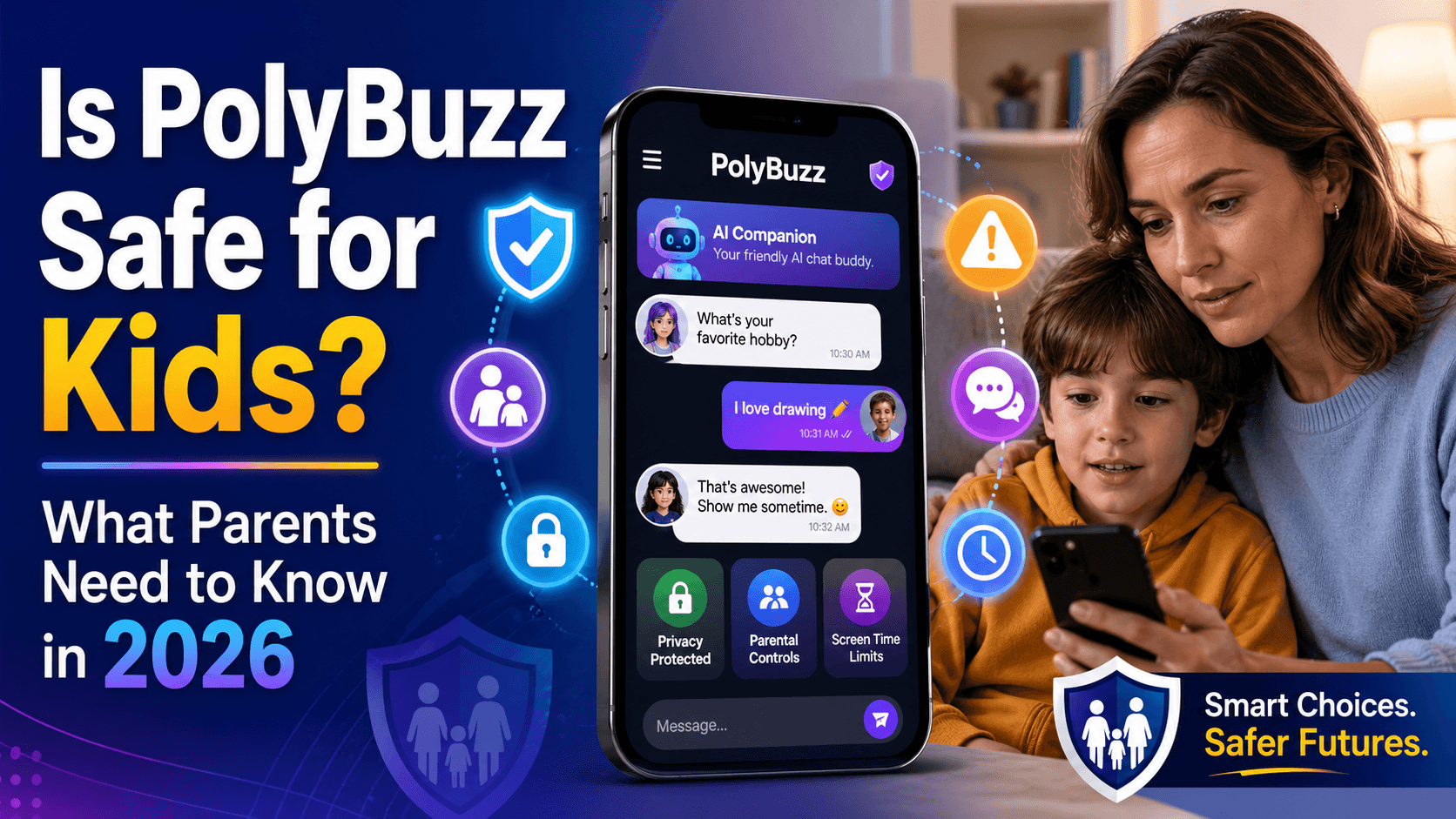
AI chat apps aimed at teens and young adults are exploding in popularity, and PolyBuzz is one of the names you might have seen in app stores, ads, or even on your child’s phone. But is PolyBuzz safe for kids?
Short answer: no. Multiple online safety experts and parental control companies warn that PolyBuzz exposes children to mature, sexual, and violent content, with weak age verification and little real protection for minors.
What Is PolyBuzz?
PolyBuzz is an AI chatbot and role‑play platform where users can chat with thousands of virtual characters, or even create their own. The app promotes itself as a place to “chat with AI friends” and offers character‑driven conversations in a highly engaging, game‑like environment.
While the marketing often highlights fun, fantasy, and storytelling, independent reviews show that many conversations quickly lean toward romance, flirting, or explicit themes, and character images are frequently highly sexualized.
Parents should also know:
- PolyBuzz is officially rated 18+ and its own terms say the app is not for minors.
- In practice, the platform heavily appeals to curious teens and even younger users who are drawn in by anime‑style characters and “AI partner” concepts.
How the PolyBuzz Website and App Work
You can access PolyBuzz either through its mobile app (on iOS and Android) or via the Polybuzz website in a browser.
Typical experience:
- Create an account and choose or build characters to chat with
- Start private, one‑to‑one conversations with those AI characters
- Explore suggested characters and “story” scenarios recommended by the platform
According to safety reviews, there are two key problems with how the PolyBuzz website and app are designed:
- Public content (e.g., character listings) may appear moderated, but once a child enters private chats, filters are weak and explicit content is easy to access.
- The interface is highly addictive: some users report spending 10–11 hours a day chatting with AI characters, with no meaningful insight for parents into what is actually being discussed.
Is PolyBuzz Safe for Kids?
Expert Opinion: No, It’s Not
Several independent child‑safety and parental‑control organizations have reviewed PolyBuzz and reached the same conclusion: Polybuzz is not safe for kids or teens.
Key reasons:
- The app is marketed and used like an 18+ platform, with frequent sexual, romantic, and sometimes pornographic themes in chats and character images.
- Age checks are extremely easy to bypass, and there is no robust, ID‑style verification to stop minors from entering.
- Content filters and moderation systems are weak, especially in private conversations, where violent or sexual content can still appear.
- Parents cannot see what their child is actually chatting about, making it impossible to monitor for grooming, explicit role‑plays, or unhealthy emotional attachment to AI characters.
One reviewer puts it bluntly: PolyBuzz stands out as “exceptionally unsafe” for kids compared with other AI chat tools, due to the combination of NSFW content, poor age verification, and lack of parental control.
Risks for Children and Teens
If a child or young teen is using PolyBuzz, they may be exposed to:
- Highly sexualized character images and suggestive prompts
- Role‑play scenarios that quickly escalate into explicit content
- Violent, disturbing, or emotionally manipulative storylines
- Unhealthy dependence on virtual relationships with AI “partners” or “friends”
For these reasons, most experts recommend keeping PolyBuzz off‑limits for children and younger teens, and exercising extreme caution even with older teens.
PolyBuzz Age Verification: How It Works (and How Kids Bypass It)
Many parents ask specifically about Polybuzz age verification without uninstalling the app. To understand the problem, you need to see how weak the current system is.
How Age Verification Works on PolyBuzz
According to reviews and user reports:
- On the mobile app, PolyBuzz asks users to enter a date of birth to “verify” they are 18 or older.
- On the web version, some users can access content with little or no meaningful age check at all.
This is essentially self‑reported age verification—the child can simply lie about their age to gain access. There are no common safeguards like ID uploads or verifiable payment methods tied to age.
How Kids Bypass Age Checks
On social platforms like TikTok, there are already tutorials showing how to skip or remove PolyBuzz age restrictions or install PolyBuzz without real age verification.
That means:
- Even if PolyBuzz adds some age‑check prompts, determined kids can quickly find community guides that tell them how to bypass those restrictions.
- Simply relying on “the app says 18+” is not nearly enough to keep younger users out.
If your child has access to PolyBuzz, you should assume that any age gate or “Teen mode” can be overridden or misused.
Why Uninstalling PolyBuzz Is Usually the Safest Option
Because the app is fundamentally built around adult‑leaning, open‑ended AI chat and role‑play, tightening settings inside the app is rarely enough to make it kid‑friendly.
Reasons to uninstall:
- Content filters are flimsy and can still let explicit material through, even when “Teen” or “Pure” modes are enabled.
- Private chats are not meaningfully monitored or visible to parents, so you have no way of knowing what your child is seeing or saying.
- The app’s core experience encourages intense emotional bonding with virtual characters, which can be confusing or unhealthy for younger users.
If you discover PolyBuzz on a child’s phone, digital‑safety experts generally recommend:
- Talking first (ask them what they like about it and what they have seen).
- Explaining clearly why the app is not appropriate for their age.
- Uninstalling the app and blocking it via parental‑control tools or router‑level filters if necessary.
What to Do if You Don’t Want to Uninstall PolyBuzz (Older Teens)
Some parents of older teens may decide not to remove PolyBuzz immediately, but this should only happen with strong guardrails and open communication.
If you choose this route:
- Set clear family rules about what kind of content and conversations are okay, and what is not.
- Use third‑party parental‑control tools or device‑level restrictions to limit usage time and, if possible, block adult content categories.
- Regularly talk about what your teen is seeing, how it makes them feel, and what to do if a conversation turns explicit or disturbing.
- Make it clear that they can come to you if something in PolyBuzz makes them uncomfortable—without fear of instant punishment.
Even then, experts still do not consider PolyBuzz safe; this is more of a harm‑reduction approach in situations where uninstalling is difficult or your teen is already deeply invested.
Safer Alternatives to PolyBuzz for Kids
If your child is curious about AI chat or storytelling, you can redirect them to safer, age‑appropriate tools instead of PolyBuzz.
Look for apps that:
- Are explicitly designed for children or families
- Have robust content filters and transparent moderation
- Offer real parental dashboards where you can see usage and, ideally, conversation summaries
- Focus on learning, creativity, or problem‑solving rather than romantic or erotic role‑play
This way, you can satisfy their interest in AI and technology without exposing them to the high‑risk environment that PolyBuzz currently represents.
Final Thoughts: Is PolyBuzz Safe for Kids?
Put simply, Polybuzz is not safe for kids. The app is rated 18+, filled with mature and often explicit content, has weak age verification, and provides little meaningful oversight for parents.
If you see PolyBuzz on your child’s device, take it as a cue to have an open, non‑judgmental conversation about online safety, relationships, and how AI chatbots work—and strongly consider uninstalling the app and blocking access going forward.