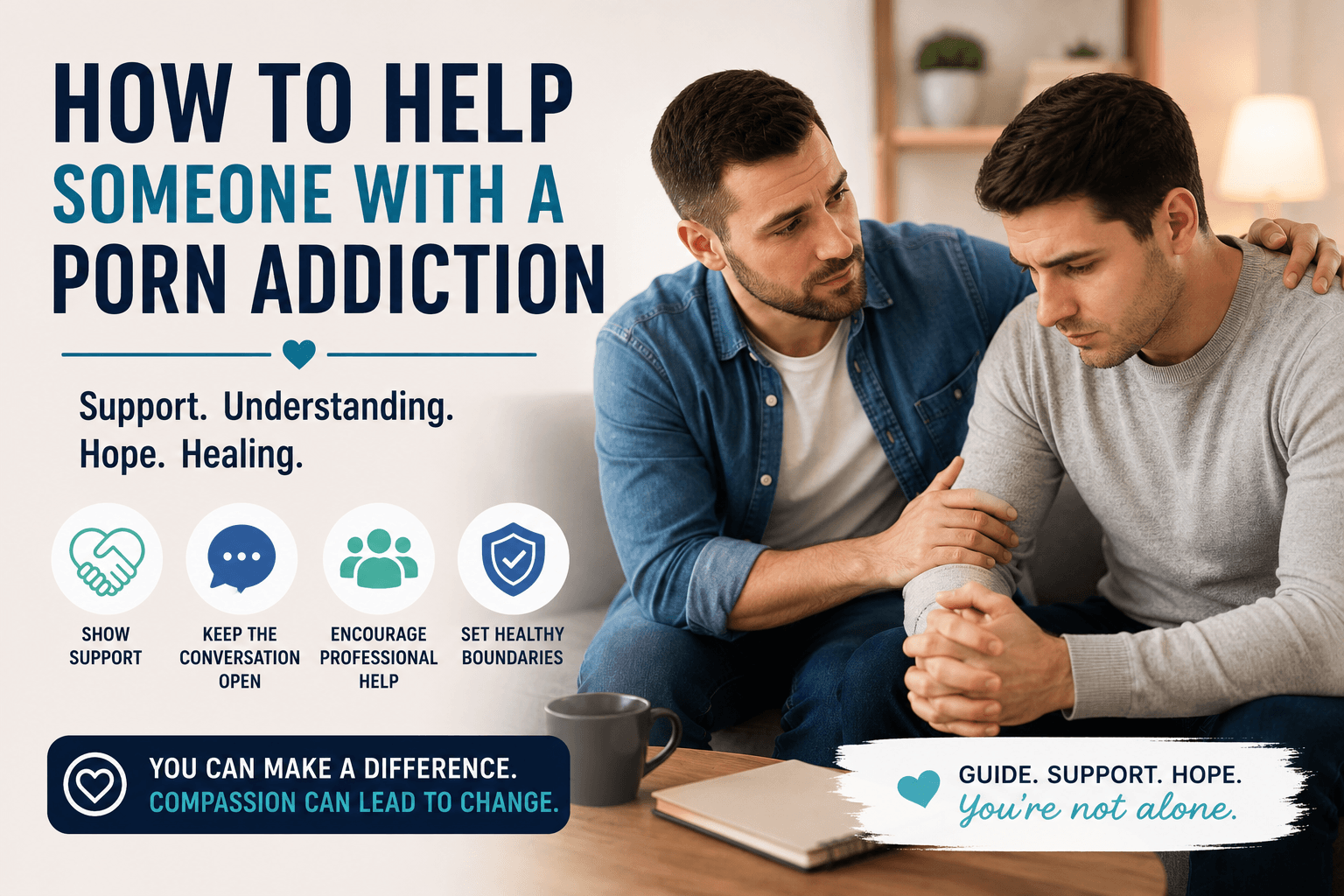

Helping someone with a porn addiction can feel confusing, painful, and emotionally heavy.
You may feel worried, betrayed, angry, sad, or unsure whether what you are seeing is truly an addiction. You may want to help, but you may also feel hurt by secrecy, broken trust, emotional distance, or repeated promises that do not lead to change.
The first thing to know is this: you cannot force someone into recovery. But you can support them with honesty, compassion, boundaries, and encouragement toward professional help. You can also protect your own emotional well-being while they decide whether they are ready to change. 🤍
This guide explains how to help someone with a porn addiction in a way that is caring, realistic, and healthy for both of you.
Important Note Before You Start
“Porn addiction” is a commonly used term, but it is not officially recognized as a separate diagnosis in the DSM-5. Some professionals may describe the issue as compulsive sexual behavior, problematic pornography use, behavioral addiction, or a compulsive habit pattern.
The label matters less than the impact.
If porn use is causing serious problems in someone’s life, relationships, work, mental health, intimacy, or ability to control behavior, it may be time to seek support from a qualified therapist or medical professional.
This article is educational and is not a substitute for professional mental health advice.
Signs Someone May Be Struggling With Porn Addiction
Porn use becomes more concerning when it feels compulsive, secretive, or harmful.
Possible signs include:
- They spend excessive time watching porn.
- They try to stop but repeatedly return to it.
- They hide or lie about their use.
- Porn affects intimacy or trust in a relationship.
- They neglect work, school, family, or responsibilities.
- They feel shame, guilt, anxiety, or depression around their behavior.
- They need more intense content over time to feel satisfied.
- They use porn to escape stress, loneliness, anger, or sadness.
- They become defensive when the topic comes up.
- They continue even after serious consequences.
One sign alone does not prove addiction. The key issue is whether the behavior feels out of control and is harming their life or relationships.
How to Start the Conversation Gently 💬
Choose a calm time, not during an argument or right after discovering something painful.
Try to speak from concern rather than accusation. That does not mean hiding your hurt. It means opening the door to honesty instead of immediately triggering defensiveness.
You might say:
“I want to talk about something difficult, and I do not want this to become a fight. I am worried about how porn is affecting you and our relationship.”
Or:
“I care about you, and I have noticed this seems hard for you to control. I want to understand what is going on.”
If you are a partner who has been hurt, you can say:
“I want to support your healing, but I also need to be honest that this has hurt me and affected my trust.”
Avoid Shame-Based Language
Shame can make secrecy worse.
Try to avoid labels like:
- “Disgusting”
- “Weak”
- “Pervert”
- “Broken”
- “Hopeless”
Instead, focus on behavior and impact:
“This behavior is hurting our trust.”
“I am concerned because you seem unable to stop even when you want to.”
“I want us to deal with this honestly.”
Compassion does not mean excusing the behavior. It means addressing it without dehumanizing the person.
Encourage Professional Help 🧠
Porn addiction or compulsive porn use often connects to deeper issues such as anxiety, depression, loneliness, trauma, stress, relationship problems, or difficulty regulating emotions.
Professional support may include:
- Individual therapy
- Cognitive behavioral therapy, also called CBT
- Acceptance and commitment therapy, also called ACT
- Sex therapy
- Couples counseling
- Group therapy
- 12-step programs
- SMART Recovery or other secular support groups
- Treatment for anxiety, depression, OCD, ADHD, or trauma if present
Therapy can help someone understand triggers, build healthier coping skills, reduce secrecy, rebuild trust, and create a realistic recovery plan.
Help Them Identify Triggers
Many people do not use porn only because of desire. They may use it to cope with uncomfortable feelings.
Common triggers include:
- Stress
- Loneliness
- Boredom
- Anxiety
- Anger
- Rejection
- Conflict
- Shame
- Fatigue
- Late-night phone use
- Social media scrolling
- Being alone with devices
- Relationship tension
A helpful question is:
“What usually happens right before you feel the urge?”
Understanding triggers helps recovery become practical instead of vague.
Support a Recovery Plan, Not Just Promises
A promise to stop can be sincere, but it is usually not enough.
A stronger recovery plan may include:
- Therapy appointments
- Support group attendance
- Accountability partner
- Device boundaries
- Website blockers
- Reduced private screen time
- Healthier coping routines
- Sleep schedule changes
- Exercise or stress management
- Honest check-ins
- Relapse plan
- Couples therapy if trust has been damaged
The goal is not surveillance. The goal is structure.
Set Healthy Boundaries 🛡️
If you are close to the person, especially if you are their partner, boundaries are essential.
A boundary is not a punishment. It is a statement of what you need to feel safe.
Examples:
“I am willing to support your recovery, but I cannot stay in a relationship built on lying.”
“I need you to work with a therapist, not only promise change.”
“I need transparency if we are going to rebuild trust.”
“I cannot be your only support person. You need professional help.”
“I will not accept being blamed for your behavior.”
Healthy boundaries protect both people from a cycle of secrecy, resentment, and emotional exhaustion.
Do Not Become Their Therapist
You can love someone deeply and still not be qualified to treat their addiction.
You can support them by:
- Listening
- Encouraging therapy
- Naming patterns
- Setting boundaries
- Celebrating real progress
- Refusing to enable secrecy
But you should not become responsible for:
- Monitoring every urge
- Controlling every device
- Fixing their shame
- Absorbing repeated lies
- Managing their recovery alone
- Sacrificing your own mental health
Recovery belongs to the person struggling. Support matters, but ownership matters more.
If You Are Their Partner
Helping a partner with porn addiction can be especially painful.
You may feel:
- Betrayed
- Compared
- Not enough
- Angry
- Numb
- Confused
- Hypervigilant
- Afraid to trust again
These feelings are valid.
Their porn use is not proof that you are unattractive, unlovable, or lacking. Compulsive behavior is often about emotional regulation, habit loops, avoidance, novelty, shame, or unresolved issues. That does not erase the hurt, but it can help you stop blaming yourself.
You may need your own support through:
- Individual therapy
- Support groups for partners
- Trusted friends
- Journaling
- Couples counseling
- Clear boundaries
- Time to process betrayal
You are allowed to care about their recovery and your own healing at the same time. 🤍
If You Are a Parent
If you are trying to help a teen or young adult, approach the topic calmly.
Avoid panic and shame. Many young people are exposed to porn early, and fear-based conversations can make them hide more.
Try saying:
“I am not here to shame you. I want to talk about how this can affect your brain, relationships, expectations, and emotional health.”
For minors, consider:
- Age-appropriate conversations
- Device boundaries
- Screen time limits
- Parental controls
- Therapy if behavior feels compulsive
- Education about consent, respect, and healthy sexuality
- Removing unsupervised late-night device access
The goal is guidance, not humiliation.
If You Are a Friend
If a friend tells you they are struggling, thank them for trusting you.
You can say:
“I am glad you told me. I do not think less of you, but I do think you deserve real support.”
Encourage them to talk to a therapist or join a support group. You can check in, but avoid becoming their only accountability system.
Friendship can support recovery, but it should not replace professional help.
What Helps Recovery?
Recovery often works best when several supports are combined.
Helpful tools may include:
- Therapy
- Support groups
- Accountability
- Honest communication
- Clear boundaries
- Reducing triggers
- Healthier routines
- Better sleep
- Exercise
- Stress management
- Journaling
- Mindfulness
- Addressing underlying mental health issues
- Repairing relationship trust
Some people also use blocking software or accountability apps, but these work best as tools, not as the whole solution.
What Not to Do 🚫
Avoid these common mistakes:
- Do not shame them into change.
- Do not make threats you are not prepared to follow.
- Do not monitor them obsessively.
- Do not ignore your own pain.
- Do not accept repeated lying as “recovery.”
- Do not believe promises without action.
- Do not become their only support system.
- Do not blame yourself for their behavior.
- Do not treat relapse as proof that change is impossible.
- Do not stay in a situation that feels emotionally unsafe.
Support without boundaries can become self-abandonment.
What If They Deny the Problem?
Denial is common.
You can say:
“I cannot force you to see it the way I do. But I need to be honest about how this is affecting me and what I need moving forward.”
If they refuse help, continue lying, or blame you, focus on your own boundaries and support.
You cannot recover for someone who does not want recovery.
What If They Relapse?
Relapse can happen, but it should not be used as an excuse for secrecy.
A healthy response to relapse includes:
- Honesty
- Accountability
- Identifying the trigger
- Talking to a therapist or support group
- Adjusting the recovery plan
- Repairing trust
- Avoiding blame
A harmful pattern looks like:
- Hiding
- Lying
- Minimizing
- Blaming you
- Refusing help
- Making the same promise again with no change
The difference is not perfection. The difference is responsibility.
When to Seek Immediate Help
Seek professional or emergency support if the person:
- Talks about self-harm or suicide
- Feels out of control and unsafe
- Is engaging in illegal sexual behavior
- Is exploiting or harming others
- Is using threats, coercion, or abuse
- Has severe depression, panic, or substance abuse
- Is exposing minors to sexual content
If there is immediate danger, contact emergency services or a crisis line in your country.
Phrases You Can Use 💌
- “I care about you, and I want to talk about this honestly.”
- “I am not here to shame you, but I cannot ignore how this is affecting us.”
- “I want to support recovery, not secrecy.”
- “What kind of help are you willing to get?”
- “I need actions, not only promises.”
- “I can love you and still need boundaries.”
- “You do not have to handle this alone, but you do have to take responsibility.”
- “I think a therapist could help you understand what is underneath this.”
- “I need honesty if we are going to rebuild trust.”
- “I am here to support you, but I cannot do the recovery work for you.”
WordPress Tags
- Porn Addiction
- Porn Addiction Help
- Relationship Advice
- Mental Health
- Addiction Recovery
- Compulsive Behavior
- Support Groups
- Therapy
- Healthy Boundaries
- Couples Counseling
FAQs
How do I help someone with a porn addiction?
Start with a calm, nonjudgmental conversation. Express concern, encourage professional help, set healthy boundaries, and avoid becoming their therapist or accountability system alone.
Is porn addiction a real diagnosis?
Porn addiction is not officially listed as a separate diagnosis in the DSM-5, but many people experience compulsive porn use that causes distress and harms relationships, work, or daily life.
What treatment helps with porn addiction?
Therapy is often helpful, especially CBT, ACT, sex therapy, individual counseling, couples therapy, and support groups. Treatment may also address anxiety, depression, trauma, OCD, or other underlying issues.
Can someone recover from porn addiction?
Yes, many people can reduce or stop compulsive porn use with honesty, structure, professional support, accountability, and healthier coping skills.
Should I monitor their phone?
Monitoring may create more conflict if it becomes controlling or obsessive. If accountability tools are used, they should be part of a mutually agreed recovery plan, not secret surveillance.
What if my partner keeps lying about porn?
Repeated lying damages trust. You may need clear boundaries, couples therapy, and your own support. Recovery requires honesty, not only promises.
Is it my fault if my partner has a porn addiction?
No. Their compulsive behavior is not proof that you are not attractive, lovable, or enough. You can support them, but you did not cause the addiction and you cannot fix it for them.
Final Thoughts 🕊️
Helping someone with a porn addiction requires compassion, but it also requires truth.
You can be gentle without being silent. You can be supportive without losing yourself. You can encourage recovery while still naming the pain, secrecy, or broken trust that needs repair.
The healthiest support says: “I care about you, I believe change is possible, and I also need honesty, responsibility, and safety.”
Recovery is possible, but it has to be chosen by the person struggling. Your role is to support, encourage, and protect your own heart along the way.